



Healthy Habits
Importance of Good Nutrition


Provides vitamins and minerals

Promotes a healthy weight

Reduces risk of chronic diseases

Improves immune system and recovery from illness/injury

Improves immune system and recovery from illness/injury

Increases energy level and focus

Increases energy level and focus
Create Your Healthy Plate
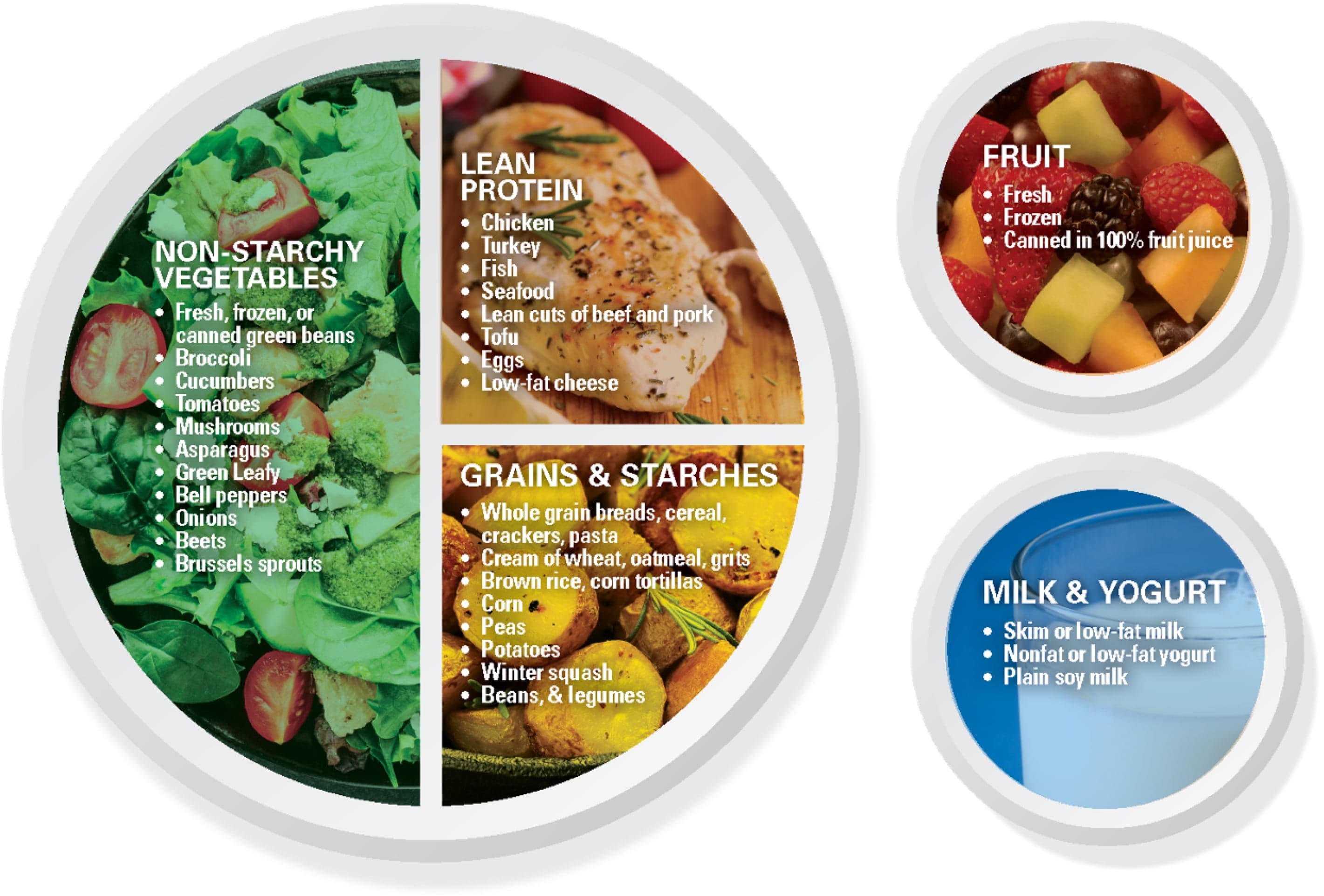
For recipe ideas, meal planning guides and more, check out diabetesfoodhub.org from the American Diabetes Association.
Physical Activity
Health

Helps build and maintain healthy bones, muscles, heart, and joints

Improves blood sugar, cholesterol, blood pressure, immunity, and energy

Reduces injury frequency and severity

Reduces risk of chronic disease

Weight management
Well-Being

Improves mood, quality of sleep, confidence, and quality of life

Reduces anxiety, depression, and stress
Increases mental sharpness
Prolongs independence and full function

Reduces injury frequency and severity
Physical activity recommendations
- 150 min/week of moderate intensity over 3 days per week
- Do not skip more than 2 consecutive days without exercise
- Reduce sedentary time by getting up every 30 minutes
- Resistance training 2-3 times per week
- General rule is to perform 2-3 sets of 8-12 reps
- Flexibility and balance training 2-3 times per week
- Make it fun!
Safety Tips
Talk to your provider before starting any exercise routine
- Ask about safe and unsafe blood sugar levels for before, during and after a workout or activity
- Discuss how to warm up and cool down safely
- Monitor your blood sugar levels more often and watch for signs of low or high levels
- Your blood sugar levels may increase or decrease during physical activity, and for up to 24 hours after exercise
- Carry carbohydrate snacks in case your blood sugar levels drop