

Bad Billing is Hurting Arizona
AZ Blue is protecting affordable coverage for Arizona employers, families and taxpayers.
The No Surprises Act (NSA) was intended to protect patients from surprise medical bills. But a costly loophole in that law is now landing squarely on the people it was meant to protect: Arizona employers are footing higher renewal costs and families are absorbing them through higher premiums.
Second Highest in the Nation. And the Costs Keep Climbing.


Average premium increase per member, per month in NSA-related costs in 2026 (nearly $800 a year)

Average premium increase for a family of four in NSA-related costs in 2026

Projected NSA cost by end of 2026 for AZ Blue families and employers
What This Looks Like in One Case
A Few Provider Companies Are Driving the Highest Cost Impact
Just five provider groups account for nearly half of AZ Blue’s NSA costs. This year, one provider group alone accounts for a staggering 30%.
These billing practices exploit the No Surprises Act (NSA) that was passed in 2020, intended to protect patients from certain unexpected out-of-network bills. While patients may be protected from surprise bills at the point of care, they now indirectly face even higher costs created by the current federal arbitration process.
Loopholes in the law produce reimbursement awards that are dramatically higher than in-network rates. We cannot ask Arizona families to absorb the growing cost of a process that is not working. It shows up in your claims, your renewal, and your premiums.
For AZ Blue customers, NSA-related costs alone are adding approximately 8–10 percentage points to renewal increases, on top of current medical trend.
A National Issue Demanding Attention
- THE WALL STREET JOURNAL:
Medical Billing Arbitration Paid Out $15 Billion to Providers in Surprise Bill Disputes
- HEALTHCARE FINANCIAL MANAGEMENT ASSOCIATION:
No surprise that the No Surprises Act is driving medical inflation
- CBS NEWS:
No Surprises Act shielded patients from big medical bills


Where It Started And Where It's Headed.
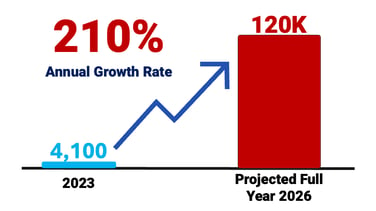
Disputes
At a sustained annual growth rate of 210%, dispute volume is expected to surge to an estimated 120,000 by full-year 2026.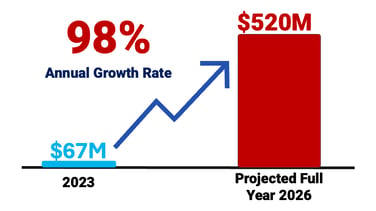
NSA Overall Costs
Driven by a 98% annual growth rate, NSA-related costs are expected to reach more than $520 million by full-year 2026.
We're Taking Action.
AZ Blue is taking action across the healthcare system and advocating for changes to make arbitration work as intended.
- NETWORK
Expanding network participation
Pursuing more in-network providers to help reduce reliance on out-of-network care. - ACCOUNTABILITY
Challenging inappropriate demands
AZ Blue pushes back against inflated payment demands and wins arbitration cases at a rate of 20%, outperforming the 14% national average. - FACILITY OVERSIGHT
Holding facilities accountable
Holding contracted facilities accountable when out-of-network providers render care. - SAFEGUARDS
Strengthening arbitration safeguards
Advocating for guardrails that keep extreme payments in check and make arbitration a true last resort. - EMPLOYER VOICE
Building an Arizona coalition
Bringing Arizona employers together to advocate for solutions. - POLICY REFORM
Advocating for policy reform
Working with policymakers and industry partners to improve arbitration and strengthen patient protections.


What Can Employers Do?
Employers play an important role in helping policymakers understand the impact of arbitration abuse on their businesses and their employees. Meaningful change requires broad action. Employers and plan sponsors can advocate for reform by:
- Sharing real-world examples of how arbitration abuse raises costs for employees and businesses.
- Engaging with policymakers to reinforce the importance of strong oversight and accountability so the system works as intended.
- Supporting efforts at the federal and state levels that keep ineligible claims out of arbitration from the beginning.
Why is This Happening?
Under the No Surprises Act, when an insurer and an out-of-network provider cannot agree on payment, both submit an offer and an arbitrator chooses one. But the process has grown far beyond what was anticipated, with outcomes that can be dramatically higher than typical market rates. Instead of serving as a limited way to resolve unusual payment disputes, arbitration is increasingly becoming part of the payment strategy itself.
Federal law gives arbitrators several factors to consider when choosing between the health plan and provider’s offers. Yet the outcomes show a troubling disconnect: there is no clear correlation between the dollar amount requested and how often the provider wins. Providers seeking dramatically different amounts can have similar win rates.
The federal arbitration process has clear rules about which disputes qualify. Yet over 40% of disputes filed against insurers don’t quality – and many are still resulting in provider wins.
One of AZ Blue’s highest-volume NSA providers is in-network, yet continues to take disputes through a federal process intended for out-of-network claims – and wins. When an in-network provider can bypass a negotiated contract, win an arbitration award and require payment through a process it should not qualify for, something is fundamentally wrong with the system.
One important benchmark is the Qualifying Payment Amount, or QPA – generally based on the median contracted rate for the same or similar service in the same geographic area.
Yet arbitration awards can be many times higher. For anesthesia, AZ Blue is seeing awards averaging more than 3,500% above the QPA.
The impact isn’t evenly distributed. A relatively small number of providers account for a disproportionate share of arbitration volume and spending. Just five provider groups account for nearly half of AZ Blue’s NSA costs. This year, one provider group alone accounts for a staggering 30%. The actions of a small portion of providers who serve less than 1% of our members can have an outsized effect on healthcare costs across Arizona.
AZ Blue is taking action on multiple fronts – expanding network contracting, challenging excessive payment demands, holding facilities accountable for out-of-network practices, and advocating for changes to the federal arbitration process.
Those efforts are producing results. AZ Blue has the lowest default rate amongst plans nationally, and second for arbitration win rate. But there is a limit to what any health plan can accomplish within a system with flawed incentives and inconsistent outcomes. Performing well within a broke process doesn’t fix the process, and doesn’t protect members.
They already are. AZ Blue is seeing arbitration volume continue to rise. If the current trajectory continues, AZ Blue projects arbitration volume could reach about 10,000 cases each month, with the annual cost impact increasing to more than $520 million by the end of 2026. Without change, that cost will continue putting unsustainable pressure on healthcare affordability for Arizona families and employers.


Our Commitment to Arizona.
Health insurance should protect people from financial hardship when they need care most. At AZ Blue, our commitment goes beyond coverage.
We’re working to make care more accessible and affordable—partnering with local organizations, investing in communities and expanding access to care across Arizona.